 |
Банк рефератов содержит более 364 тысяч рефератов, курсовых и дипломных работ, шпаргалок и докладов по различным дисциплинам: истории, психологии, экономике, менеджменту, философии, праву, экологии. А также изложения, сочинения по литературе, отчеты по практике, топики по английскому. |

|
4. Прокомментируйте следующие арифметические действия: 100 × 57 = 5700; 48 : 2 = 24; 963 + 205 = 1168; 73690 – 540 = 73150. Прочитайте и запомните следующие идиомы:Ten to one — it’s very likely. One for the road — the last alcoholic drink before leaving a place. Eat sb alive — to defeat or destroy someone easily. The 64000 dollar / the million dollar question — a difficult but important question. Look (like) a million dollars — looking very attractive and well. The eleventh hour — the latest possible time you can do something. Numerals and prepositions in DAYS, MONTHS, YEARS, SEASONSThere are: 100 years in a century / 365 days in a year / 12 months in a year / 52 weeks in a year / 7 days in a week / 2 weeks in a fortnight / 24 hours in a day / 60 minutes in an hour / 60 seconds in a minute. Days of the week: Sunday, Monday, Tuesday, Wednesday, Thursday, Friday, Saturday. Saturday + Sunday = the weekend С днями недели употребляется предлог ON : I saw her on Sunday . AT — со словом weekend : I will go there at the next weekend. Months: January, February, March, April, October, November, December (названия месяцев начинаются с большой буквы). Seasons: spring, summer, autumn, winter С месяцами и временами года используется предлог IN : My birthday is in December, in winter. Мы можем говорить об отрезках времени, используя следующие выражения: In the past people didn’t have computers. People may travel to Mars in the future . We’ll be with you in a moment . (a very short time) Ann is in London at the moment . (now) See you soon ! (=in a short time) We met recently . (= not long ago) Годы обозначаются количественными числительными: 1800 — eighteen hundred 1907 — nineteen o seven 1966 — nineteen sixty-six 2000 — twenty hundred / two thousand 2005 — two thousand five Слово year не употребляется после обозначения года, но может употребляться перед ним: in the year nineteen twelve . Даты обозначаются порядковыми числительными на письме и в чтении: the eleventh of March . Practice:1. В тексте 6 ошибок. Найдите и исправьте их: I’m going to a party on Saturday for Tom’s birthday. His birthday is on Thursday but he wanted to have the party on the Weekend. He’s having a barbecue. I think June is a good month to have a birthday because of the weather. I love going to barbeques on the summer. My birthday is in Winter and it’s too cold to eat outside! 2. Работайте с партнером. Ответьте на вопросы: 1. What is the date of your birth? 2. What is your favorite season? 3. What is the third/the first/the last day of the week? 4. What is the last month/the first of the year? 5. Which season is the hottest? 6. Which season is the coldest? 3. Совместите даты с событиями и запишите числительные словами: 1776, 1989, 1815, 1789, 1969, 1917 1. Neil Armstrong became the first man of the Moon … . 2. The Berlin Wall, divining East and West Berlin, was destroyed … . 3. The Russian Revolution occurred and the communists took over … . 4. The Declaration of Independence was written by 13 British Colonies in America … . 5. The Bastille prison in Paris was destroyed … . 6. The Battle of Waterloo resulted in Napoleon’s final defeat … . 4. Работайте с партнером. Прочитайте текст: The weather is a subject we can always talk about. It often changes and brings cold and heat, sunshine and rain, frost and snow. One day is often unlike the next. In summer the sun shines, often there is no wind and there are no clouds in the sky which is blue and beautiful. We can see stars and the moon at night and people like walks, outdoors games and sports in the fresh air. When autumn comes, the days become shorter and colder. It gets dark earlier and often heavy clouds cover the sky bringing rain with them. Sometimes there is a heavy rain, so that an umbrella or a raincoat is necessary if we don’t want to get wet through. At last frost and snow come. Fields, forests and houses are covered with snow and rivers and lakes with ice. But spring again brings sunshine and warm winds. Sometimes it snows but snow will not remain long, it will melt in the warm sun. Spring will bring bright sunshine, green grass and flowers. We usually say: «A nice day», «Not a bad day» if the weather is fine. We can say: «It looks like rain», «It looks like snow» or «It’s bad weather» when the weather is cold. Расспросите партнера о его любимом времени года, используя идиомы, опорные слова и выражения из текста и следующей таблицы:
Сделайте заметки :
Работайте с группой. Пользуясь заметками, расскажите группе о любимом времени года вашего партнера. Ответьте на вопросы группы . Прочитайте и запомните следующие идиомы:An Indian summer — a period of time in autumn when the weather is warm and sunny / a happy or successful period of time when you are older or near the end of your working life Day in, day out also week in, week out also month in, month out also year in, year out — all the time, with no variety Many moons ago — a very long time ago. To hell with sb / sth — I don’t care about somebody or something. Be running out of gas — to have less energy or desire to continue than before. The Present Perfect Continuous Tense
Practice:1. Объясните употребление Present Perfect Continuous в следующих предложениях: 1. I have been wishing to speak to you ever since you returned. 2. Jane’s been cleaning all day, and I’ve been cooking. 3. «I’ve been waiting for a chance to see you, Ralf,» he said. 4. I have been thinking of your decision since we parted. 5. Here’s the water you’ve been drinking. 6. Jane, they’ve been seeking for you for hours. 2. Раскройте скобки , употребляя Present Perfect Continuous Tense: 1. Ever since my school days I (to study) mathematics. 2. How long you (to stay) with your friends. 3. I (to learn) French for a year. 4. We (to drive) for hours and we still have not found the right road. 5. She (to have) ten driving lessons up to now. 6. Mary (to write) a novel for the last six months. 7. The British (to drink) tea since 1650. 8. They (to play) chess since 3 o’clock. 3. Прочитайте описание ситуации и напишите два предложения. В одном используйте Present Perfect, в другом — Present Perfect Continuous. Объясните, чем отличаются по смыслу эти предложения: 1. Jane wants to go out in the rain. She is looking for her umbrella. She/look for/the umbrella/for half an hour. She/look for/his raincoat/all over his room. 2. Ralf is washing his suit. He/wash/it/the whole morning. He/wash/his shirt/now. 3. Kate isn’t ready for her examination yet. She/prepare/for it/since the beginning of the month. She/prepare/30 questions/so far. Прочитайте и запомните следующие идиомы:Back seat driver — someone who likes to give the driver of a car advice about how to drive. Send sb packing — to make someone leave. Clear the air — to discuss a problem to try to solve it or get rid of bad feeling. A false alarm — something that seems about to happen, but then does not. Make an ass of yourself — to do something which makes people think you are stupid. The Future Simple Tense or the Future Continuous Tense
Practice:1. Раскройте скобки , используя форму Future Continuous Tense. Переведите предложения : 1. Next year he (study) at University. 2. If you come at noon, we (eat) lunch. 3. At ten o’clock tomorrow, I (have) my music lesson. 4. We (travel) in Europe this time next month. 5. Don’t call them after six. They (watch) their favorite TV program. 2. Работайте с партнером. Прочитайте следующие диалоги: A: Will the bus arrive soon? A: Will you be ready soon? B: Yes, it will. It’ll arrive in ten minutes. B: Yes, I will. I’ll be ready in a few seconds. 3. Заполните пропуски в данных диалогах:
4. Работайте с партнером. Прочитайте следующие диалоги: 1. A: Will Alice and Mary stay in London next month? B: No, they won’t. They are going to Paris. 2. A: Will Tom arrive from Moscow next week? B: No, he won’t. He is going to stay in Madrid for another two weeks. 3. A: Will you fly to London tomorrow? B: No, I won’t. I am going to fly to Geneva. 4. A: Will Mary come back next year? B: No, she won’t. She is going to work in Bombay till next spring. 5. Работайте с партнером. Составьте свои диалоги по образцу из упр. 4, используя данные слова и выражения. Драматизируйте их : Bill, come out of prison; Mary, marry John; Jack, stay with his wife; you, cook dinner; your husband, take the children from school. Прочитайте и запомните следующие идиомы:Miss the boat also miss the bus — to fail to take an opportunity. Take a bath — to lose a lot of money in business. Go for a Burton — to be destroyed or killed. Do your level best — to try as hard as you can. Mum’s the word — don’t tell anyone about this. Lesson 17 Be going toЭтот оборот используется, чтобы сказать о будущих действиях в следующих ситуациях: — сказать о своих намерениях и планах: I ’ m going to phone her tomorrow . I told you I am going to wash up. — сделать прогноз, особенно когда есть очевидные основания: The sky is gray — I think it is going to rain. It is eight o’clock — Are you going to be late again? Look! That building is going to collapse soon. Отрицательная форма образуется при помощи not: I am not going to see her today. Употребление оборота be going to возможно в прошедшем времени: I am going to see you. — I was going to see you. John is going to meet me. — John was not going to meet me. Are you going to see me? — Yes, I am. Were you going to see me? — Yes, I was. Why is John going to meet me? — Why was John going to meet me? Practice:1. Поставьте глагол в правильную грамматическую форму ( will или to be going to ), объясните ее употребление: Model: — I have a terrible headache. — Have you? Wait for a moment there and I will get an aspirin for you. 1. A: Why are you filling that bucket with water? B: I … (water) the plants. 2. A: What shall we have for supper? B: I don’t know. I can’t make up my mind. A: Come on, hurry up! Make a decision! I’m hungry. B: Ok then. We … (have) chicken. 3. A: I want to re-paint the walls in my house. B: Oh, really? What colour … (you/paint) them? 4. A: Where are you going? Are you going shopping? B: Yes, I … (buy) something to present my wife with. 5. A: We need some jam for lunch. B: I … (get) some. Do you want anything from the shop? 6. A: Look! There’s smoke coming out of the kitchen. It’s on fire! B: Good heavens! I … (call) the fire-brigade at once. 2. Соедините обе части предложений по смыслу, используя союз because : Model: I am going to save money because I spend too much.
2. Работайте с партнером. Расспросите партнера о том , что он собирается делать в выходные, используя идиомы, опорные слова и выражения из следующей таблицы :
Сделайте заметки :
Работайте с группой. Пользуясь заметками, расскажите группе о том, что ваш партнер собирается делать в выходные . Ответьте на вопросы группы. Прочитайте и запомните следующие идиомы:Call of nature — going to the toilet . Go Dutch (with sb) — to share the cost of a meal, film etc. with someone. Be a paper tiger — to appear to be a lot more powerful than you really are. Hold the purse strings — to control the money in a family, business etc. No great snakes — not very good. Lesson 18 Modals IModal verbs обозначают отношение к действию, т. е. возможность, вероятность, необходимость его совершения. Модальных глаголов десять: can, could, shall, should, may, might, will, would, must, ought to . Модальные глаголы имеют следующие особенности: 1. В третьем лице, единственном числе не присоединяют окончание - s : × The boy cans swim. √ The boy can swim . 2. К модальным глаголам присоединяется инфинитив смыслового глагола без to (bare infinitive), за исключением ought : × You should to go home early. × You ought go home early. √ You should go home early. √ You ought to go home early. √ The boy can swim. √ You should go home early. √ You ought to go home early — исключение. 3. В вопросительном предложении модальный глагол ставится перед подлежащим: Must I go to bed now ? 4. В отрицательном предложении к нему добавляется not или n ’ t : I cannot swim . You mustn’t tell lies . Вопросительная форма: Must I do the ironing right now? Can you speak French? Отрицательная форма: I can not (can’t) swim. You must not (mustn’t) tell lies. 5. Обычно модальные глаголы не образуют форм Past Simple, за исключением may (might), can (could): — Why didn’t you come to Mary’s party yesterday? — I couldn’t. I had to stay with my mother. 6. Нельзя использовать один модальный глагол после другого: × She must can do it. √ She must be able to do it. × You will can go. √ You will be able to go. Обратите внимание:
| ||||||||||||||||||||||||||||||||||||||||||||||||||||||||||||||||||||||||||||||||||||||||||||||||||||||||||||||||||||||||||||||||||||||||||||||||||||||||||||||||||||||||||||||||||||||||||||||||||||||||||||||||||||||||||||||||||||||||||||||||||||||||||||||||||||||||||||||||||||||||||||||||||||||||||||||||||||||||||||||||||||||||||||||||||||||||||||||||||||||||||||||||||||||||||||||||||||||||||||||||||||||||||||||||||||||||||||||||||||||||||||||||||||||||||||||||||||||||||||||||||||||||||||||||||||||||||||||||||||||||||||||||||||||||||||||||||||||||||||||||||||||||||||||||||||||||||||||||||||||||||||||||||||||||||||||||||||||||||||||||||||||||||||||||||||||||||||||||||||||||||||||||||||||||||||||||||||||||||||||||||||||||||||||||||||||||||||||||||||||||||||||||||||||||||||||||||||||||||||||||||||||||||||||||||||||||||||||||||


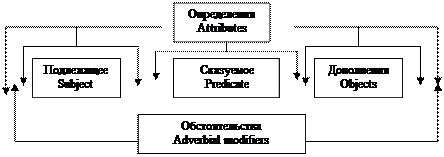
 (структурные связи между словами)




 to stop → stop
 to go → go

 Two hundreds, four thousands, five millions
| Глагол |
Значение |
В настоящем (Present) |
В прошлом (Past) |
| must should ought to must need needn’t (don’t need to ) |
обязанность, приказ, совет необходимость отсутствие необходимости |
You must smoke less. You mustn’t take my things. You should wear a white dress. He ought to apologise. They must have clean water. I need more information. We needn’t book in advance. We don’t need to book in advance. |
You should have smoked less. You shouldn’t have taken my things. You should have worn a white dress. He ought to have apologised. They had to have clean water. I needed more information. We needn’t have booked in advance. We didn’t need to book in advance. |
В вопросительном предложении must имеет значение «обязательно ли должен». Часто в вопросе выражается коннотативное значение раздражения, нежелания выполнить действие: Must we do it ourselves ? (Мы обязательно должны это делать сами?)
Выражение умения, способности, возможности
производить действие и разрешения
| Глагол |
Значение |
В настоящем (Present) |
В прошлом (Past) |
| can cannot/can’t can may cannot/ can’t may not |
способность, умение неспособность разрешение запрещение |
She can play the gitar. He can’t speak French. You can park here. Visitors may use the car park. You can’t park here. Visitors may not use the car park. |
She could play the gitar when he was ten. He could speak French well at school. We could park here. Visitors could use the car park. We couldn’t park here. Visitors could not use the car park. |
Could — в выражении вежливой просьбы: Could you help me, please?
| REMEMBER Английская речь ритмична. Важна смена ударения и безударности. В утвердительной форме модальные глаголы не подвергаются ударению. В краткой вопросительной и отрицательной форме они ударные. ▪ ▪ ▪ ▪ ▪ ▪ ▪ Can you skate ? — No , I can ’ t . I can ’ t skate , but I can ski . ▪ ▪ ▪ ▪ ▪ ▪ ▪ ▪ ▪ You can drive, can’t you? / Can you drive? Yes, I can. / No, I can’t (cannot). ▪ ▪ ▪ ▪ ▪ ▪ ▪ ▪ ▪ Your son can write, can’t he? / Can your son write? Yes, he can. / No, he can’t (cannot). |
Выражение предположения, вероятности, возможности
| Предположение |
Возможность |
|
| в настоящем (Present) |
He can’t be in Germany. He couldn’t be in Germany. (это невозможно — я видел его недавно) He must be in Germany now. (я предполагаю) |
He may be in Germany. He could
be
in Germany. |
Practice:
1. Работайте с партнером. Расспросите партнера о том, что он может и чего не может делать, используя идиомы, слова и выражения из следующей таблицы:
Model: Can you swim? → Yes, I can. / No, I can’t.
I can drive, but I can’t fly a plane.
| I |
Play any musical instruments |
the guitar, the piano, saxophone |
| II |
Speak any foreign languages |
French, English, Italian, Polish, Ukrainian, Hindi |
| III |
Play any games, do activities |
Baseball, football, tennis, boxing; swimming, riding |
| IV |
Use |
a computer, vacuum cleaner, mobile phone |
| V |
Others |
explain the theory of relativity, recite poetry |
Сделайте заметки :
|
|
QUESTIONS |
ANSWERS |
| I |
|
|
| II |
|
|
| III |
|
|
| IV |
|
|
Работайте с группой. Пользуясь заметками, расскажите группе о том, что может, и чего не может делать ваш партнер. Ответьте на вопросы группы.
2. Составьте правила поведения клиентов в гостинице, используя следующие глаголы.
Model: The guests mustn’t smoke in the room!
— leave valuables (ценные вещи) in the room,
— bring friends after 11 p. m.,
— take the keys with them, when they go somewhere,
— drop litter on the floor,
— make noise,
— usurp the hotel’s towels and bathrobes,
— take pets in bed,
— have sex.
3. Представьте, что вы сдаете квартиру внаем. Составьте список правил для жильцов.
You must ________________ You mustn ’ t ______________
__________________ __________________
__________________ ___________________
__________________ ___________________
4. Переведите следующие предложения:
Model: She must be at home now. → Она должно быть дома сейчас.
1. You must be very hungry.
2. He must be very busy at this moment. Don’t ring him up.
3. It must be very difficult to learn a foreign language.
5. Подчеркните правильный модальный глагол в следующих предложениях:
1. She didn’t need / needn’t have to take any money because her friend was going to pay.
2. We needn’t have / couldn’t have ordered so much food as nobody was hungry.
3. I don’t need to / shouldn’t wear glasses because my eyesight is still quite good.
4. You need / must be a member of the library before you can borrow books.
6. Работайте с партнером. Прочитайте следующие диалоги:
1. A: Should I buy a blue blouse or a pink one?
B: I think you should buy a pink one.
A: Why do you say that?
B: Pink goes better with the color of your hair.
2. A: Should we vote for the Democrats or the Communists?
B: I think we should vote for the Democrats.
A: What makes you say that?
B: The Democrats think more about the future than the Communists.
3. A: Should I marry Linda or Jane?
B: I think I should marry Linda.
A: How come?
B: Linda is more beautiful than Jane.
7. Работайте с партнером. Составьте свой диалог по образцу из упр. 6, используя собственные слова. Драматизируйте его:
Прочитайте и запомните следующие идиомы:
Whoop it up — to have a lot of fun with a group of friends.
Try your wings — to try to do something new.
Be with it — to feel intelligent and organized.
Crack the whip — to control people and force them to work harder.
Cupboard love — pretended love, especially as shown by animals or children to people who give them things they want.
Lesson 19
Modals II
У ряда модальных глаголов есть эквиваленты, которые используют для выражения модальности в прошлом и будущем:
can = be able to
may = be allowed to
| must |
= have to |
| = be to |
Глаголы to be, to have спрягаются, принимая соответствующую временную форму: My grandmother was not able to walk at 70.
Вопросы и отрицания с have to требуют вспомогательных глаголов do , does , did :
– You came home late yesterday. Did you have to work all day?
– No, I didn’t . I just had to stay late to finish my report.
Выражение долженствования, обязанности, необходимости
| Значение |
В настоящем (Present) |
В прошлом (Past) |
|
| have to be to |
должен — вынужден, обстоятельства вынуждают, обязывают строгие предписания должен — моральный долг обязывает |
Sorry, I have to go now. My train is leaving in a minute. At the West Point Military Academy the cadets have to obey very strict rules. We are students. We are to work hard. |
I had to go yesterday — I was missing my train. When I was a cadet I had to obey very strict rules. We were to work hard when we were students. |
Выражение умения, способности, возможности
производить действие и разрешения
| Оборот |
Значение |
В настоящем (Present) |
В прошлом (Past) |
| be able to be allowed to |
физическая и умственная способность выполнить действие разрешение |
She’s able to play the piano. She isn’t able to play the piano because her hand hurts. Visitors are allowed to use the car park. Visitors are not allowed to use the car park. |
She was able to play the piano when she was five. She wasn’t able to play the piano at yesterday concert because her hand hurt. Visitors were allowed to use the car park. Visitors were not allowed to use the car park. |
Practice:
1. Переведите пары предложений и объясните различие между ними:
She could not cook such big dinner . — Она не могла приготовить такой большой ужин.
She need not cook such big dinner . — Ей не надо готовить такой большой ужин.
I cannot read French books. You need not read so many books.
They could not come in time. They need not come in time.
She could not buy that dress. She need not buy a new dress.
The boy cannot lock the door. The boy need not lock the door.
2. Прочитайте текст и заполните пропуски с помощью глагола to have to и следующих глаголов:
do, put, obey ( подчиняться ), run, look, polish, tell, stand, sit, memorize ( запоминать ), touch, get, go, tell, be.
Tom, a first year cadet at West Point, is writing a letter to his brother. West Point is the United States Army Military Academy. It is a very strict (жесткий, суровый) school, and there are many rules (правила) the cadets must obey.
Dear Joe,
How are you doing? Well, here I am at West Point. Life here is very difficult. We have to obey a thousand rules. A first-year cadet is nothing here. We … everything that an upperclassman tells us to do. Upperclassmen always tell the new cadets to do a lot of crazy things. For example, we … down our suitcases and pick them up again about fifty times. And we … up and down the stairs ten times.
Our uniform is very important. They … perfect at all times. I … my shoes about three times a day. If an upperclassman can’t see his reflection in our shoes, we … them again.
Cadets … at attention when they speak to upperclassmen. When we stand at attention, our chins … our chests. We even … at attention when we eat our meals. You won’t believe some of the other stupid things. We … the menu for lunch and dinner every day. When an upperclassman asks «What’s for dinner?» we … him: «Roast, chicken, potatoes, carrots, salad and apple pie, Sir». Also, if an upperclassman wants a Coke, we … to the soda machine and … a Coke for him.
Honor is important at West Point. Cadets … honest at everything they do. For example, if you know that another cadet lied or cheated on a test, you … the commander.
I don’t have time to write any more. I … to class now.
Please write to me. I’m very lonely here. It’s very different from high school and home.
See you at Christmas,
Tom.
Vocabulary.
Upperclassman — курсант старшего курса , reflection — отражение , stand at attention — стоять по стойке смирно , chin — подбородок , chest — грудь , honor — честь , lie — лгать , cheat — мошенничать .
3. Работайте с партнером. Ваш друг учится в университете и живет в общежитии. Расспросите о его обязанностях, используя следующие выражения:
Model :
— Do you have to come early to class ?
— Yes, I do. Our classes begin at eight.
— Do you have to cook for yourself ?
— No, I needn’t. There is a canteen at the University.
To stay late, to attend lectures, to prepare for the seminars, to study two foreign languages, to wash the clothes, to work a lot at the library, to work part time, to work hard to get ready for exams.
4. Вставьте подходящий по смыслу глагол из списка: can , may , must , need
Why … not you understand it? It’s so easy!
You … not have bought this meat: we have everything for dinner.
We … not carry the bookcase upstairs. It’s too heavy.
We … not carry this sofa upstairs ourselves: the workers will come and do it.
5. Заполните пропуски в тексте глаголами из списка : can, can, can, must, must, required to, must not, should, allowed to, do not have to.
Overseas visitors … use their usual driving licences in New South Wales but … have proof that they are simply visiting. You are also … carry your licence with you whenever you are driving. You … drive without wearing a seat belt. Driving is not the ideal way to get around central Sydney, although a car … be very convenient for journeys into the suburbs and further afield. If you are planning to use a car you … purchase a good street directory. The city centre is often congested and it … be difficult to find a parking place. Look out for the blue and white ‘P’ signs. You … pay at a meter after 6.30 pm on weekends, on Saturday afternoons and all day Sunday.
At some intersections, which are clearly signposted, drivers are … make a left-hand turn at a red light after stopping, but … give way to pedestrians.
Прочитайте и запомните следующие идиомы:
Clip sb’s wings — to limit someone’s freedom or power.
One-horse town — a place with few comforts and activities; a dull rural town.
Have your cake end eat it too — to spend or use something up but still have it; to have two things when you must choose one.
Go to the dogs — to decline in looks or health; to be ruined or destroyed; to ruin oneself.
Buy a pig in a poke — to buy something without seeing or examining it.
Lesson 20
Modals III
Конструкции с модальными глаголами могут использоваться в следующих ситуациях:
чтобы попросить совета :
— Shall I take the exam now or wait till later?
— Should I go by car or by bus?
— Would you accept the job if you were me?
чтобы дать совет :
— You should get your hair cut.
— You should have had to drink less.
— You ought to use a dictionary.
— You ought to have revised a bit more.
попросить об услуге :
— Can/Could I ask you to do me a favor?
— Would you do me a favor? (более вежливо)
— Would you help me carry this bag?
— May I use your telephone?
— Will you please be quiet in here.
выразить готовность сделать что-то, предложить помощь, подать идею:
— Shall I help you clear the room?
— Can I give you a hand with your luggage?
— Would you like a lift to the railway station?
— Shall we open the window?
— We can stay in tonight if you like.
дать разрешение или отказать :
— You can have the day off.
— You can’t borrow my car tonight, because I need it.
— Could I leave the office early today?
— You may register for the exam until the end of September. (более официально)
Practice:
1. Прочитайте описание ситуации и задайте подходящие вопросы, пользуясь Shall I … или Shall we … .
1. Tomorrow is your husband’s/wife’s birthday and you don’t know what to present him/her with. Ask your friend for advice.
What … .
2. You’ve just seen a bag in a shop. You are not sure whether to buy it or not. Ask your friend for advice.
3. You and your family haven’t decided what to have for dinner. You say … .
4. Your boss wants you to call him/her up. You don’t know what time to call up. Ask him/her.
What … .
5. You’re going out. But there is a strong possibility that it will rain and you aren’t sure whether to take an umbrella or not. Ask your friend for advice.
6. You and your husband/wife are going to a restaurant. You haven’t decided whether to go by car or on foot. You say … .
2. Ответьте на вопросы , используя глагол needn’t.
Model: — Shall I do the shopping now?
— No, you needn’t. You can do it later.
1. — Shall I type this advertisement now?
— No, … . You … later.
2. — Shall I clean the flat today?
— No, … . You … tomorrow.
3. — Shall I go to the bank this morning?
— No, … . You … this afternoon.
3. Задайте вопросы к следующим ситуациям:
Model: — You want to borrow your friend’s camera. What do you say to him/her?
— Could I borrow your camera?
1. You have a car and you want to give your mother-in -law a lift. What do you say?
Can I ______________________________________?
2. You have to go to the railway station but you don’t know how to get there. Ask a passer-by.
Could you__________________________________?
3. You are at an interview. You want to smoke a cigarette.
May I______________________________________?
4. You want to invite your cousin to stay with you for the weekend.
Would you like_______________________________?
5. You want to leave work early because you have some important things to do. Ask a permission.
Mr. Goldsmith, do you think I______________________________?
6. Your neighbour is listening to loud rock music. Ask him politely to turn it down.
Do you think you____________________________?
Прочитайте и запомните следующие идиомы:
Dressed to the nines — wearing fashionable clothing; dressed to attract attention.
Show must go on — the proceedings must continue regardless of any catastrophe or difficulty; nothing can stop what has been planned.
Monkey business — silliness or fooling around; dishonest or illegal activities; idiotic pranks.
Touch and go — very risky, uncertain, or critical.
White elephant — any possession that is useless, unwanted, or costs a lot of money to keep.
Reading and Speaking Practice
Culture Corner
Задание 1. Прочитайте текст и скажите, какие факты, упомянутые в тексте, для вас:
А) интересны;
В) необычны;
С) новы;
D) знакомы.
There is, perhaps, an excuse for people who use the word «England» when they mean «Britain». It cannot be denied that the dominant culture of Britain today is specifically English. The system of politics that is used in all four nations today is of English origin, and English is the main language of all four nations. Many aspects of everyday life are organized according to English custom and practice. But the political unification of Britain was not achieved by mutual agreement. On the contrary. It happened because England was able to exert her economic and military power over the other three nations.
Today English domination can be detected in the way in which various aspects of British public life are described. For example, the supply of money in Britain is controlled by the Bank of England (there is no such thing as a «Bank of Britain»). The present queen of the country is universally known as «Elizabeth the Second», even though Scotland and Northern Ireland have never had an «Elizabeth the First»! (Elizabeth I of England and Wales ruled from 1553 to 1603.) The term «Anglo» is also commonly used. (The Angles were a Germanic tribe who settled in England in the fifth century. The word «England» is derived from their name.) For example, newspapers and the television news talk about «Anglo-American relations» to refer to relations between the governments of Britain and the USA (and not just those between England and the USA).
I. True or False
Задание 2. Определите, какие утверждения соответствуют тексту, исправьте неверные утверждения.
1. People usually call Great Britain just England.
2. English is the main language of all four nations.
3. The political unification of Britain was achieved by mutual agreement.
4. The most important bank of Great Britain is called the Bank of Britain.
5. Elizabeth the First was the queen of England, Wales, Scotland and Northern Ireland.
6. The term ‘Anglo-American relations’ refers to relations between England and the USA.
II. Multiple choice
Задание 3. Ответьте на вопросы, выбрав один из предложенных вариантов ответа.
1. Why do people use the word «England»’ when they mean «Britain»?
a) Because they want to excuse for that.
b) Because the dominant culture of Britain is English.
c) Because they live there.
2. This is NOT the reason why people use the word «England» when they mean «Britain»:
a) The system of politics that is used in all four nations today is of English origin;
b) English is the main language of all four nations;
c) Many aspects of everyday life are organized according to English custom and practice;
d) More people live in England.
3. How was the political unification achieved?
a) It happened because nobody was against;
b) It happened because England was the best place to live;
c) It happened because England was more powerful than the other three nations.
4. What statement expresses the massage of the text best of all?
a) England is a great country;
b) The dominance of England in Great Britain is evident;
c) English culture is very rich.
III. Summary
Задание 4. В предложенной аннотации вставьте подходящие по смыслу слова.
Four, Great Britain, language, dominant, dominance, custom, powerful, politics.
People usually call … just England. There are … reasons for that. First, the … culture of Britain today is English. Second, the system of … that is used in all four nations today is of English origin. Third, English is the main … of all four nations. And finally, many aspects of everyday life are organized according to English … and practice. It happened because England was more … than the other three nations.
The … of England in Great Britain is evident.
IV. Speaking practice
Задание 5. Примите участие в беседе, опираясь на информацию, полученную из текста. Дополните недостающие фразы в диалоге .
Your friend: Well, I would like to go to England.
You: Do you mean Great Britain?
Your friend: Yes, and what is the difference?
You: England is just one part of Great Britain. Great Britain consists of … .
Your friend: Why do people call Great Britain just England?
You: Because … .
Your friend: Why did it happen?
You: You see, … .
Your friend: Can you give any examples of England’s dominance?
You: Sure, … .
Your friend: Those are interesting facts to know!
Задание 6. Инсценируйте диалог.
Задание 7. Подумайте над следующей проблемной ситуацией. Попытайтесь объяснить её, пользуясь информацией из текста:
In I970, the BBC showed a series of programmes about the history of the British Empire. Before the series started, they advertised it. The advertisement mentioned ‘England’s history’. Within a few hours, the BBC had received thousands of angry calls of protest and it was forced to make an apology. Who do you think the angry callers were? Why did the BBC apologize?
Modulus 3
The Adverb
| 1. прилагательное + ly = наречие clear — clearly happy — happily exact — exactly serious — seriously bad — badly But: good — well |
|
| They are happy children He got a bad/good mark He is a serious man |
She smiled happily He answered badly/well They do everything seriously |
| 2. прилагательное = наречие hard late far fast early |
|
| It’s a hard task We took a fast train It was a late hour I am an early bird It’s a far country |
Think hard about it He always drives fast We came home late I always get up early How far is it? |
| Обратите внимание на различие в значениях наречий: Those birds fly high ( высоко ) They think highly of this man ( высокого мнения ) He lives near his office ( близко , рядом ) It’s nearly five o’clock ( около ) It’s late ( поздно ) I saw him lately ( недавно ) This workers work hard ( упорно ) He can hardly walk ( еле - еле , едва ) |
|
Practice:
1. Заполните пропуски в предложениях наречиями из списка: never , always , usually , rarely , sometimes .
1. I … cook dinner.
2. My husband … watches TV.
3. She … eats breakfast.
4. He … drinks champagne at parties.
2. Продолжите предложения :
I always … .
I usually … .
I sometimes … .
I rarely … .
I never … .
3. Некоторые наречия имеют две формы c различными значениями. Заполните пропуски в предложениях и объясните различия в значениях наречий:
hard / hardly
I work very … .
I can … believe the news.
late / lately
I’ve been to the cinema a lot … .
Don’t ring too … .
real / really
If that coat is made of … fur, I don’t want it.
I’m … sorry for that happened.
awful / awfully
The exam was … difficult.
My hair feels … — I must wash it.
quick / quickly
If you’re going shopping, please be … .
My father drives very … .
Прочитайте и запомните следующие идиомы:
Put your shoulder to the wheel — to make a great effort; to begin to work hard.
Once in a blue moon — almost never; very seldom; hardly ever.
Make your mouth water — to look so attractive and desirable that it makes you want to have it very much; to want to eat or drink something that looks or smells delicious.
Lose your shirt — to lose everything, especially money.
Hit the hay — to go to bed.
The Past Simple Tense or the Past Continuous Tense
| Past Simple (V2 (-ed)) |
Past Continuous (was/were + V4 (-ing)) |
| Мы используем Past Simple |
Мы используем Past Continuous |
| — для выражения действий или состояний в прошлом, когда есть указание на время действия Long ago people built houses out of wood. We watched TV yesterday . — для выражения действий в прошлом, идущих в хронологической последовательности. Yesterday I got up early, drank a cup of coffee and drove to work. In the evening I watched TV and then walked my dog. Then I got to bed. — с такими словами-спутниками как a year ago, last Monday, yesterday I graduated from the University five years ago. |
— для выражения действия, которое продолжалось в какой-то момент или период времени в прошлом He was listening to the news on television at nine o’clock last night. It was pouring with rain all day and she was wondering what to do. — вместе с Past Simple, чтобы сказать о действии, которое произошло во время другого действия I was sleeping when my friend called. |
| Утвердительная форма |
I saw John last week. |
I was still having dinner when my boss called. |
| Вопросительная форма |
When did you see John? |
Were you still having dinner when your boss called? |
| Отрицательная форма |
I didn’t (did not) see John last week. |
I wasn’t (was not) having dinner when my boss called. |
Practice:
1. Работайте с партнером. Прочитайте следующие диалоги и драматизируйте их:
1. A: I saw you yesterday, but you didn’t see me.
B: Really? When?
A: At about 3:15. You were getting out of a police car.
B: That wasn’t me. Yesterday at 3:15 I was cooking dinner.
A: Hmm. I guess I made a mistake.
2. A: I saw you yesterday, but you didn’t see me.
B: Really? When?
A: At about 10:30. You were riding your bicycle along Main Street.
B: That wasn’t me. Yesterday at 10:30 I was watching TV.
A: Hmm. I guess I made a mistake.
2. Работайте с партнером. Составьте собственные диалоги, используя данные слова:
Getting out of a taxi — sleeping, walking out of the shop — cleaning my apartment, jogging through the park — fixing my car, getting on a bus — playing table-tennis.
- Составьте свой диалог. Драматизируйте его:
4. Поставьте глагол в скобках в правильную грамматическую форму ( Past Simple или Past Continuous ):
1. He (have) an accident because he (drive) too fast.
2. We (not/drink) anything because we (not/be) thirsty.
3. Somebody (knock) at the door when Bob (have a shower).
4. Barbara (not/waste) much time reading love stories because she (not/be) interested in them.
5. While we (wait) for the bus Mary (buy) some newspapers at the news-stall.
6. I (see) a nice dress in the shop when I (come) to my parents yesterday.
5. Выразите свое несогласие со следующими утверждениями, используя информацию в скобках:
Model: I think John was reading a magazine while waiting for his wife. (do a crossword)
No, he wasn’t. He was doing a crossword.
I believe Jack was talking to that pretty girl when you come. (to his mother)
No, he wasn’t. …
I suppose they were still dancing when he returned. (leave the house)
No, they weren’t. …
I think Jane was looking at Fred when Tom saw her. (the other way)
No, she wasn’t. Jane … .
6. Работайте с партнером. Представьте, что ваш друг только что приехал из отпуска.
Расспросите его о том, как он провел отпуск, используя идиомы, опорные слова и выражения из следующей таблицы:
| I |
Transport |
Travel/go … by air, sea, rail; by car, taxi, bus; by public transport; on foot |
| II |
Accommodation |
Stay in a/an… hotel, self-catering flat, motel, camp, cabin, cottage |
| III |
Weather |
Sunny, warm, fine, dry, wet, hot, windy; heat wave, thunderstorm, breeze; all the time; several days |
| IV |
Activities |
Have a good holiday, swim in the sea, go to the beach, go to the disco, make some new friends, go sightseeing |
Сделайте заметки :
| QUESTIONS |
ANSWERS |
| I |
|
| II |
|
| III |
|
| IV |
Работайте с группой. Пользуясь заметками, расскажите группе о том, как ваш партнер провел отпуск. Ответьте на вопросы группы .
Прочитайте и запомните следующие идиомы:
Fly-by-night — selling for quick profit then disappearing; a swindler or unreliable person.
Dutch treat — each person pays for his or her own food and entertainment.
Can’t fight city hall — an ordinary person cannot win a struggle against an administrative system.
Better half — either partner in marriage.
At the end of sb rope — at the limit of sb ability, endurance, or patience to do sth.
The Past Perfect Tense or the Past Perfect Continuous Tense
| Past Perfect (had + V3 (-ed)) |
Past Perfect Continuous (had been + V4 (-ing)) |
| Мы используем Past Perfect |
Мы используем Past Perfect Continuous |
| — для выражения действия, которые закончились до какого-либо момента в прошлом, обозначенного другим действием или указанием времени: By midnight, all the guests had left. |
— для выражения действия, которое длилось до какого-то момента в прошлом They had been climbing for five hours before they reached the top of the mountain. I had been feeling sleepy all day so I went to bed early . |
| Утвердительная форма |
My brothers had already gone to bed by the time I got home. |
We had been driving for five hours before we reached the town. |
| Вопросительная форма |
Had your brothers already gone to bed by the time you got home? |
Had we been driving for five hours before we reached the town? |
| Отрицательная форма |
My brothers hadn’t (had not) gone to bed by the time I got home. |
We hadn’t (had not) been driving for five hours before we reached the town. |
Practice:
1. Соедините обе части предложений по смыслу:
| 1. Fleming was studying influenza |
a) while he was sitting under an apple tree |
| 2. Columbus discovered America |
b) when he discovered penicillin |
| 3. Hillary and Tenzing reached the top of Everest |
c) though at first he believed he had reached Asia |
| 4. Scott reached the South Pole in 1912 |
d) after they had been climbing for several days |
| 5. Newton made his great discovery |
e) but Amundsen had beaten him by month |
2. Соедините два предложения в одно, следуя модели:
Model: I expected the letter several days. Then the postman brought it to me.
I had been expecting the letter several days before the postman brought it to me.
1. The scientists conducted the research for many years. Then they achieved satisfactory results.
The scientists … before … .
2. He stayed in the hotel for two weeks. Then I arrived.
He … before … .
3. The students wrote the test paper. Then I came.
The students … when … .
4. They drove in the car for many hours. Then they came to the crossroads.
They … before … .
3. Составьте предложения, используя слова в скобках:
Model: When I came to Moscow, I telephoned a friend of mine but I could only speak to her sister. (She/already/leave/for her office) She had already left for her office.
1. When I rang them up, they were at home. (They/already/return/from the market)
2. I began to look for his address in my notebook but I could not find it. (I/not/write it down)
3. They discussed this question for two hours. (However/they/not come to a definite conclusion)
Прочитайте и запомните следующие идиомы:
All thumbs — awkward and clumsy, especially with the hands.
Bleeding heart — an extremely softhearted person who feels compassion or pity towards all people, including those who may not deserve sympathy.
Busy as a beaver — working very hard; extremely industrious.
Catch someone red-handed — to catch someone in the act of doing sth wrong.
Keep a stiff upper lip — to be brave and not show emotion in a time of trouble.
The Future Perfect Tense and the Future Perfect Continuous Tense
| Future Perfect (will have + V3 (-ed)) |
Future Perfect Continuous (will have been + V4 (-ing)) |
| Мы используем Future Perfect |
Мы используем Future Perfect Continuous |
| — для выражения действия, которое закончится к определенному моменту в будущем When I finish this book it means I will have read all of her books. |
— для выражения действия, начавшегося до определенного момента в будущем и продолжающегося в течение известного периода вплоть до этого момента. By next June he will have been living here for ten years. |
| Утвердительная форма |
I will have finished my homework by 6 o’clock. |
By the 1st of May I shall have been reading this book for a fortnight. |
| Вопросительная форма |
Will you have finished my homework by 6 o’clock? |
Shall you have been reading this book for a fortnight by the 1st of May? |
| Отрицательная форма |
I won’t (will not) have finished my homework by 6 o’clock. |
By the 1st of May I shan’t (shall not) have been reading this book for a fortnight. |
Форма the Future Perfect Continuous Tense является книжной и употребляется редко и, главным образом, в письменной речи.
Practice:
1. Закончите предложения, используя слова из списка, и переведите их:
be, finish, sleep, fly
1. I … in London for ten years by next June.
2. By Friday, I … this book.
3. Wake me up by nine o’clock. — I … long enough by then.
4. It’s strange that when we get to Sydney, we … half way round the world.
2. Раскройте скобки, используя форму Future Perfect , и переведите предложения:
1. I am sure they (complete) the new road by August.
2. By the time next year you (forget) all your troubles.
3. If you don’t make note of that appointment, you (forget) it by the next week.
4. By the time you arrive, I (finish) reading your magazine.
5. A century from now, wars, I hope (become) a thing of the past.
3. Составьте вопросительные предложения из следующих слов и выражений. Используйте форму Future Perfect или Future Perfect Continuous:
scientists / discover how to prolong human life by the middle of this century,
we / manage to contact life in another galaxy by the year 2050,
when the project is completed / they / work on it for five whole years,
robots / take over the world in a hundred years from now.
4. Напишите о себе небольшое эссе на тему « By the time I am 50».
Model: «I shall have married twice … I shall have finished the University ... I shall have worked for 30 years for a firm …»
Прочитайте и запомните следующие идиомы:
Kill two birds with one stone — to do two things by one action; to get two results with just one effort.
Like two peas in a pod — identical; alike in looks and behavior.
Head in a clouds — absent-minded; daydreaming; lost in thought.
Footloose and fancy-free — not attached to anyone; not involved with anyone romantically; free.
On the cuff — on credit; to be paid later.
Verbals: Gerund and Infinitive
The Gerund (Герундий) — это неличная форма глагола, выражающая действие как процесс, но не имеющая категории лица, числа, наклонения. Он никогда не выступает в роли простого сказуемого и выражает время по отношению к моменту действия, выраженного в личной форме , одновременное или предшествующее. Герундий сочетает свойства глагола и существительного, выполняет в предложении синтаксические функции существительного.
Формы герундия
| Active Passive |
| Indefinite translating being translated Perfect having translated having been translated |
Герундий, как глагол
— может определяться наречием и иметь при себе прямое дополнение: I made a good progress in speaking your language ;
как существительное
— выполняет в предложении функции существительного, являясь подлежащим (Dancing has already begun ), дополнением (I don ’ t remember hearing this tale before ), обстоятельством (She walked on without turning her head ), определением (Don ’ t miss the opportunity of seeing this actor ), частью сказуемого (In the night it started raining );
— сочетается с предлогами: I am very tired of riding;
— определяется притяжательными местоимениями и существительными в притяжательном падеже: We don ’ t approve of John ’ s buying this house .
ОБРАТИТЕ ВНИМАНИЕ: Отглагольное существительное также имеет окончание - ing и по форме сходно с простым герундием, отличие в том, что оно не имеет категории залога и времени, употребляется с артиклем, принимает форму множественного числа, определяется прилагательным, стоящим перед ним или существительным с предлогом of , стоящим после него .
Герундий всегда употребляется после
— глаголов admit, appreciate, avoid, can’t help, consider, delay, deny, enjoy, finish, mind, miss, postpone, practice, quit, recall, regret, report, resent, resist, resume, risk, suggest, propose: I finished washing the dishes;
— глаголов с предлогом approve of, be better of, confess to, count on, depend on, give up, insist on, look forward to, object to, keep on, put off, rely on, succeed in, think about, think of, worry about: Bob gave up smoking because of his doctor advice;
— прилагательных с предлогом accustomed to, afraid to, capable of, fond of, intent on, interested in, successful in, tired of: Jean is afraid of getting married now;
— существительных с предлогом choice of, excuse for, intention of, method for/of, possibility of, reason for: There is no reason for leaving this early.
Отрицательная форма : We regret not going to the party last night.
The Infinitive (Инфинитив ) — to stop , to go — неличная, неспрягаемая форма глагола. Его признаком служит частица to .
Формы инфинитива
| Active |
Passive |
|
| Indefinite |
to ask to write |
to be asked to be written |
| Continuous |
to be asking to be writing |
|
| Perfect |
to have asked to have written |
to have been asked to have been written |
| Perfect Continuous |
to have been asking to have been writing |
Инфинитив может выполнять функции:
— подлежащего (It is useless to discuss this question );
— обстоятельства цели (Laws were not made to be broken );
— определения (Forget it. It isn’t worth to worry about );
— дополнения (She had learned to dance at this school );
— части сказуемого (The cabin was not easy to find ).
Инфинитив всегда употребляется после :
— глаголов afford, agree, arrange, begin, decide, expect, hope, intend, learn, manage, offer, need, plan, pretend, promise, propose, refuse, seem, start, threaten, want, would like/love, would prefer, regret, remember, try, forget, allow, ask, command, encourage, expect, forbid, force, get, hate, help, invite, order, permit, persuade, prefer, remind, reach, tell, want, warn: My sister want to study literature.
— прилагательных anxious, boring, dangerous, hard, eager, easy, good, strange, pleased, prepared, ready, able, usual, common, difficult: It is dangerous to drive in this weather.
Герундий и инфинитив употребляются после:
— глаголов start , begin , continue (без изменения значения)
My brother started to learn the gitar two years ago.
— после глаголов like , love , hate , prefer с небольшой разницей в значении I like swimming . ( в целом ) / I like to swim every day when I’m on holiday ( в определенной ситуации );
— после глаголов forget, go on, mean, regret, remember, stop, try с полным изменением значения:
I ’ ll never forget meeting Mr . President (Я всегда буду помнить об этом) / I forgot to post Mum ’ s letter (Мне следовало это сделать, но я не сделал);
I regret to inform you that you’ve failed the test ( Мне жаль говорить тебе это ) / My sister regrets leaving school ( Она сожалеет , что сделала это ).
Practice:
1. Перестройте предложения, используя герундий в качестве подлежащего:
Model: It is very relaxing to listen to music. → Listening to music is very relaxing.
1. It is difficult to speak another language well.
2. One of my favourite things is to go shopping.
3. It is illegal to drive a car when you are 15.
4. It is a good idea to talk about things that worry you.
2. Выберите инфинитив или герундий в следующих предложениях:
He gave up to smoke/smoking.
I don’t want to go/going out tonight. I am too tired.
Don’t forget to lock/locking the door before to go/going to bed.
I must remember to go/going to the dentist on Wednesday.
Everybody helped to clean/cleaning up after the party.
I have finished to decorate/decorating the house.
3. Закончите предложения, выражая свою точку зрения:
1. I’m really interested in … .
2. I’m looking forward to … .
3. … is something that makes me nervous.
4. … is one of my favourite things to do at the weekend.
4. Ответьте на вопросы, пользуясь словами в скобках. Используйте инфинитив в качестве обстоятельства цели, подчеркните его в предложении.
Model: Why do you wear glasses? (show/I/ serious)
I wear glasses to show I am serious.
1. Why did she do to the library? (borrow/some/books)
2. Why did John write the letter? (remind/Ben/about/his/promise)
3. Why is Barbara putting her house on fire? (get/her/insurance)
4. Why are you driving so fast? (arrive/in/my/office/on/time)
5. Закончите предложения, используя слова в скобках. Переведите предложения .
If you want to be successful, you’ll have to get used to……… (work hard).
Nick was soon tired. He was not used……….………the stairs (climbing).
He used to…………………………..…when I spoke (listen attentively).
When I was in the country I got used to……..…….…………(drink milk).
When I was a child, I used to ……………………………(collect stamps).
Прочитайте и запомните следующие идиомы:
Out of here — good-bye; I’m going; I’m leaving.
Pull your leg — to tease or fool someone; to jokingly try to lie to sb.
Shot in the arm — sth that lifts your spirits, energy, and confidence.
Throw a curve — to surprise someone in an unpleasant way; to mislead or lie.
Upper crust — high society; social or financial elite; important people.
Verbals: The Participle I The Participle II
Причастие
I
(
The
Participle
I
)
является неличной формой глагола и имеет окончание -
ing
(
stopping
)
.
Оно занимает промежуточное положение между глаголом и прилагательным, а также частично между глаголом и наречием. Причастие I имеет форму времени и залога, но время действия, выраженное Причастием I, имеет относительное значение,
т. е. обозначает одновременность или предшествование по отношению к действию, выраженному глаголом в личной форме (He
looked
at
the
carpet
while
waiting
for
her
answer
). Глагольные свойства Причастия I совпадают с глагольными свойствами герундия, оно может:
— иметь прямое дополнение (Opening the door, he went out on the street );
— определяться наречием (The children were really excited about opening their presents ) .
Функции определения и обстоятельства являются общими как для Причастия I, так и для герундия. НО: герундий в этих функциях всегда употребляется с предлогом, а Причастие I — без предлога либо с союзами when или while (в роли обстоятельства времени). Do you know the woman talking to Tom? Feeling hungry, I decided to make myself a sandwich. Причастие I употребляется для образования сложных глагольных форм группы Continuous (When I arrived at the party everyone was dancing. ).
Причастие II ( The Participle II ) также является неличной формой глагола и имеет окончание - ed , у неправильных глаголов оно соответствует V3. В предложении Причастие II может быть:
— определением (Books borrowed from the library must be returned in two weeks. );
— обстоятельством (Deeply affected, he left the room. );
— частью сказуемого (The gate was locked .).
Practice:
1. Образуйте Participle 1 от следующих глаголов:
To talk, to come, to know, to say, to change, to hear, to show, to arrive, to do, to open, to give, to laugh.
2. Переведите следующие предложения на русский язык, обращая внимание на перевод причастий. Определите их функцию в предложении:
1. Leaving the cinema the people were talking about the film.
2. The boy was looking at me smiling.
3. Walking slowly along the street he met his friends.
4. Two smiling girls sat on the bench talking gaily.
5. There were many people standing at the bus stop.
6. I am talking to my old friend.
3. Образуйте Participle II от следующих глаголов:
To use, to write, to repeat, to discuss, to invite, to attack, to bring, to play, to leave, to give, to open, to spend, to see, to take.
4. Переведите следующие предложения на русский язык, обращая внимание на перевод причастий. Определите их функцию в предложении:
1. He stopped before a closed door.
2. A car driven by an old man came along the road.
3. This film was shown last night.
4. The man called Peter came up to us.
5. We could not see the sun covered by dark clouds.
6. Have you already heard the latest news?
5. Раскройте скобки, используя Participle I и Participle II :
1. This is a letter (to address) to you.
2. (to go) through the perk, I met him.
3. I like to read stories (to write) by this author.
4. (to translate) this article we learned some interesting facts.
5. She found the key (to lose) by me yesterday.
6. Do you know the boys (to play) tennis?
Прочитайте и запомните следующие идиомы:
Not have a clue — not to know (anything).
A cog in the machine — someone who does a small and possibly unimportant job in a large organization.
Be at a low abb — to be at a low level or in a bad situation.
Bust a gut — to work very hard.
Hang in there! — continue doing what you are trying to do.
Lesson 27
The Complex sentence
Сложноподчиненное предложение состоит из главной и придаточной (или нескольких) частей. Придаточные делятся на разные типы. Сложносочиненное состоит из двух и более равноправных частей.
Типы сложных предложений
СЛОЖНОСОЧИНЕННОЕ СЛОЖНОПОДЧИНЕННОЕ

Типы придаточных предложений:
1. Определительные придаточные предложения: I know the man who wrote this book .
Местоимения who , which часто могут опускаться:
The girl (whom) I met yesterday was beautiful.
The book (which) I read was very boring.
Предлоги обычно находятся в конце придаточного предложения:
I spoke to a boy. → He is the boy (who) I was spoke to .
2. Придаточные, вносящие дополнительную информацию сообщают информацию, которая может быть опущена, и выделяются запятыми: Mary , who is English , is coming to stay in our house . Они могут относиться и к одному слову, и ко всей части предложения: We went to see the latest Star Wars film , which was fabulous .
В этих придаточных относительные местоимения всегда сохраняются: Chocolate , which I love , gives me energy .
3. Придаточные причины и следствия присоединяются следующими конструкциями:
1. so many / so few ( that ) — с исчисляемыми существительными:
I have got so many CDs that I don’t know where to put them!
2. so much/so little (that) с неисчисляемыми существительными:
They spent so much time in the park that they missed their bus.
3. so … that с прилагательными и наречиями:
I’m so glad (that) I passed my exam.
4. such a с исчисляемыми существительными в единственном числе:
I had such a fabulous day (that) I didn’t want to go home.
5. such … that с исчисляемыми существительными во множественном числе и неисчисляемыми существительными:
It was such good news (that) we couldn’t believe it!
Наречия too, enough могут выражать отрицательное отношение к чему-то — что-то нежелательно или раздражает: I ’ ve eaten too much ( food ). I feel sick! My coffee’s too hot. I can’t drink it. It was cold enough to snow. I’ve had enough food.
4. Придаточные времени , которые присоединяются следующими конструкциями:
| After |
+ Present Simple |
Когда событие в будущем уже произойдет |
I’ll see you after I get back home. |
| As soon as |
Непосредственно после какого-то события |
As soon as they arrive at the station, call a taxi. |
|
| Before |
Раньше какого-либо события в будущем |
Finish your work before Mum comes home. |
|
| By the time (that) |
К тому времени как… |
He’ll have gone by the time you get here. |
|
| Immediately |
В то же время как… |
Make sure you insure the house immediately. |
|
| Once |
Непосредственно за каким-то событием в будущем |
Once she arrives, we can start. |
|
| Suppose/supposing |
Представь, что… |
Supposing you fall ill, what will you do? |
|
| Until |
До того времени, как…(продолжать) |
Keep reading until I tell you to stop. |
|
| When |
Непосредственно за событием в будущем |
I’ll call you when I/m free. |
|
| Whenever |
В любое время |
Phone me whenever it’s convenient. |
|
| While |
В течение какого-то времени |
Let’s forget work while we’re on holiday. |
5. Придаточные условия, которые присоединяются следующими конструкциями:
| If |
+ Present Simple |
Если |
If the weather is fine… |
| As/so long as |
Но только если… |
I’ll come as/so long as you pay. |
|
| (just) in case |
Это возможно в случае… |
Take an umbrella just in case it rains. |
|
| On condition that |
При условии, что… |
I’ll lend you money on condition that you give it back soon. |
|
| Provided/providing (that) |
Только в случае если… |
We’ll get there on time provided we leave now. |
|
| Unless |
За исключением… |
We won’t go for a walk unless it’s sunny. |
|
| Whether (…or not) |
Вводит возможные или альтернативные события в будущем |
Whether we win or not depends on how committed we are. |
Примечание: союзами if , when , whether могут присоединяться придаточные, отвечающие на вопрос «что». В этом случае, вместо Present Simple используется Future Simple: I doubt if/whether Ann will come. I don’t know when they’ll come back.
Practice:
1. Прочитайте текст, найдите в нем придаточные, вносящие дополнительную информацию :
We think we are most advanced creatures on the planet. But if we look a little deeper, we will realize that all our inventions, which make life easier, are really just copies of things already found in nature. Here are a few examples of the incredible things animals can do.
We may have invented heat-seeking cameras which find disaster victims, but snakes can ‘see’ heat. Rattlesnakes have sensors which can detect small changes in temperature. They ‘see’ us by the heat that surrounds us, so they can find their prey in the dark. Even our footprints leave some warmth, which can be detected long after we have passed. This means snakes know where we are and where we have been.
We discovered electricity and ways of looking for it. However, creatures which live in the sea have electrosensors which can detect electricity.
A swimmer who is injured gives off electricity — his heartbeat and his nerves flashing on and off in panic. A shark wouldn’t ‘see’ him through its eyes, which are very small, but it would fell the swimmer’s fear.
2. Составьте из пар предложений одно, используя соответствующие местоимения и знаки препинания, где это необходимо:
Необходимая информация :
The Asian elephant is a large mammal. Its pregnancy lasts 22 months.
The anabas is a fish. It can climb trees.
The chameleon is a lizard. It can change colour.
The mosquito is a malaria-carrying insect. It causes 2000000 deaths a year.
Дополнительная информация :
The tiger is only found in Asia. It is the largest member of the cat family.
Camels are used for trips across the desert. They can drink 113 litres of water in half an hour.
The ostrich is the world’s tallest bird. It cannot fly.
Electric eels kill fish by electrocuting them. They eat half of their body weight in food every day.
3. Запишите несколько дат, имен, названий и объясните, что они означают, следуя модели:
Model: 1960 — That was the year when I was born.
4. Заполните пропуски в предложениях, используя enough и слова из списка. Переведите предложения .
large, fast, warm, meat
1. This dress isn’t … . — I need a larger size.
2. Have we got enough … for the barbecue?
3. He didn’t run … enough to win the race.
4. If the weather is …, we’ll have a beach party.
5. Подчеркните правильное слово в следующих предложениях:
It was such a / such hot weather we didn’t need sweaters.
The day passed such / so quickly that I didn’t notice the time.
We got home so / such a late that everyone had gone to bed.
There was so / such loud music we couldn’t hear each other speak.
6. Подчеркните правильное слово в следующих предложениях и переведите их:
1. Until/When he arrives, everyone must stand.
2. Please phone your dad by the time/immediately.
3. As soon as/ Before you hear the alarm, run for the exit.
4. Supposing/In case you had a baby girl — what would you call her?
5. We’re not going to stop digging until/ as soon as we find the ancient ruins.
Прочитайте и запомните следующие идиомы:
Under the weather — sick; not well; in trouble with money.
With flying colors — with ease and great success; in triumph.
Rain or shine — no matter what happens; whatever the weather is like.
No spring chicken — not young any more.
Nothing to sneeze at — not small or unimportant; something to be taken seriously.
The Passive Voice
Пассивный залог — The Passive Voice — употребляется:
— с большинством переходных глаголов (глагол + прямое дополнение), когда само действие более важно, чем субъект этого действия (производитель):
This helicopter was designed in Russia;
— когда производитель действия неизвестен:
The manuscripts were found in 19 th century ;
— если информация о субъекте действия важна, то она вводится предлогом by :
This wedding cake will be baked by the best cooks.
Образование: To be + V3 (Past Participle)
| Present Simple |
I am surprised by this message. |
| Past Simple |
I was surprised by this message. |
| Future Simple |
I will be surprised by this message. |
| Present Perfect |
The letter has been written by a woman. The letter has been written by a woman. |
| Present Continuous |
These students are being examined now. |
| Past Continuous |
He was being examined this time yesterday. |
| Present Perfect |
We have been shown this film twice. |
| Past Perfect |
had been |
| Future Perfect |
I/he shall/will have been |
| Глаголы sell , wash , wear , bake , read употребляются в активном залоге, хотя и с пассивным значением: These novels sell well . The cloth wears well. |
|
Если в предложении два возможных субъекта, предмет или лицо, то подлежащим в пассивном залоге становится лицо: I was given a prize .
Пассивный залог может употребляться с модальными глаголами, предложение строится по следующей схеме:
Modal verb + be + Past Participle
| must/can/should be/may/might + Participle II |
||
| Active Voice |
Passive Voice |
|
| I can do it. He should do it. They must do it. He has to do it. You may do it. They might do it. |
It can be done by me. It should be done by him. It must be done by them. It has to be done by her. It may be done by Ann. It might be done by them. |
|
Practice:
1. Измените залог в предложениях, следуя модели:
Model: Somebody broke that window yesterday — That window was broken yesterday.
1. Sarah invited Jane to her party. 2. Someone has written a book about the first American president. 3. Police arrests people every day. 4. Someone stole my car last night. 5. We will paint a house tomorrow.
2. Работайте с партнером. Составьте собственные диалоги из данных слов, следуя модели:
Model: — Do you want me to feed Rover?
— No. Don’t worry about it. He’s already been fed .
— Do you want me to ______________________?
— No. Don’t worry about it. _________________.
Make the bed, do the dishes, take the garbage out, wake the children up, carve the chicken.
3. Составьте из данных слов вопросы в пассивном залоге:
Model: Question: The new road / still / build?
… Is the new road still being built? ...
Answer: Yes, they haven’t finished it yet.
Question: Where / the first car / manufacture?
… .
Answer: In the USA.
Question: how many mobile phones / sell/ recently?
… .
Answer: Millions!
Question: Who penicillin / discover / by?
… .
Answer: By Alexander Fleming.
Question: When / cure / find / for Aids?
… .
Answer: Very soon, I hope.
Question: When / the first real computers / build?
… .
Answer: During the Second World War.
Прочитайте и запомните следующие идиомы:
Cool it — to relax, calm down; to stop being so exited or angry.
Make ends meet — to earn just enough to live within one’s income.
Lock, stock and barrel — the whole of sth; all the parts of a thing; everything.
Pass the hat — to ask for contributions.
Penny for your thoughts — What are you thinking? Tell me what is on your mind.
Reported Speech. Reporting questions
Косвенная речь используется для передачи чужой речи. После глаголов, вводящих косвенную речь (reporting verbs) в форме настоящего времени, время глагола в придаточном предложении не меняется:
She says «I love him». → She says she loves him.
Если глагол в предложении, вводящий косвенную речь, употреблен в прошедшем времени, форма в придаточном смещается на один шаг:
Present Continuous → Past Continuous
«It is raining in my town». → She said it was raining in her town.
Past Continuous → Past Perfect Continuous
«I was sleeping ,» she told me. → She told me that she had been sleeping .
Present Simple → Past Simple
«I want to buy it,» he told me → He said that he wanted to buy it.
Past Simple → Past Perfect
«I saw your sister». → He said he had seen my sister.
Present Perfect → Past Perfect
«You’ve won the second prize,» the man announced → The man announced that they had won the second prize.
Present Perfect Continuous → Past Perfect Continuous
«I have been driving for five years,» he said → He said that he had been driving for five years.
Future Simple → Future in the Past
«We’ll buy you a car ,» parents promised. → Parents promised that they would buy me a car.
Изменения в обстоятельствах места и времени при изменении прямой речи в косвенную:
here there
now then
this / these that / those
today that day
tomorrow the next day/the following day
yesterday the day before/the previous day
last week the week before
next week the following week
ago before
Если при переходе в косвенную речь меняется субъект предложения, то используется придаточное с союзом that :
«We’ll go with you.» → They agreed to go with me.
«You can go with us!» → They agreed that I should go with them.
Модальные глаголы would , could , might , ought , should не меняются в косвенной речи, остальные меняются следующим образом:
must → had to «I must go.» → He said he had to go.
can → could «I can do it». →He said he could do it.
may→ might «I may do it». → He said he might do it.
Reporting questions
Косвенные вопросы начинаются со следующих выражений:
Can you tell me what time the film starts ? (сравни: What time does the film start?)
I’d like to know where I can buy tickets? (сравни: Where can I buy tickets?)
Could you tell me if / whether she is going to call me tonight? (сравни: Is she going to call me tonight?)
Could you tell me how to get to the theatre? / how I get to the theatre? (сравни: How do I get to the theatre?)
В косвенных вопросах не ставится знак «?». Грамматические формы изменяются так же, как и в утвердительных предложениях с косвенной речью; порядок слов такой же, как и в утвердительном предложении. Союзы if или whether используются для общих вопросов (yes/no):
«Are you okay?» → He asked me if I was okay.
«Where do you live?» → He wanted to know where I lived.
«Are you a headmaster?» → He asked me if/whether I was a headmaster.
Косвенное выражение вежливой просьбы, совета или предупреждения строится по схеме:
ask/tell/advise/warn + object (дополнение)+ infinitive
«Listen, please!» → He asked/told us to listen.
«Be careful!» → He advised/warned us to be careful.
Practice:
1. Работайте с партнером. Завершите диалог, следуя модели:
Model: — I forgot to tell you. _______________ called yesterday.
— Really? What did she say?
— She said/told (that) ____________________________ .
Christina: «I think I’m falling in love with you».
— I forgot to tell you. _ Christina __ called yesterday.
— Really? What did she say?
— She said/told (that) _she thought she was falling in love with me__ .
1. Our niece Liz: «I got a raise last week».
2. Uncle Charlie: «I’ll be arriving this Friday on the two o’clock train».
3. Aunt Jane: «I’ll send you a postcard from Egypt».
4. My boyfriend: «I’m sorry I forgot about your birthday».
5. The mechanic: «The car is ready and you can pick it up any time you want to».
6. Grandma: «I was planning to visit this weekend, but I won’t be able to come because I have the flu».
2. Прочитайте текст. Найдите предложения с косвенной речью:
GOOD ADVICE
Sue had a bad stomachache yesterday afternoon. She called her doctor and asked him what she should do. Her doctor told her to rest in bed. He also told her not to eat too much for dinner. And he told her to call him in the morning if she was still sick. Sue felt better after speaking with her doctor. She’s glad she can always depend on him for good advice.
3. Завершите предложения в косвенной речи:
Model: «Let me help you». My mother offered to help me.
1. «This spot is the best place for a picnic».
My mother said…………………….
2. «If I were you, I wouldn’t drink so much».
He advised his friend………………
3. «Can you answer the phone? I’m having a shower!»
He asked his son………………….
4. Работайте с партнером. Завершите диалог, следуя модели. Драматизируйте полученные диалоги :
Model: A: I’m a little annoyed at ___________________ .
B: How come?
A: _____________told me _____________________ .
B: Why did _____ tell you that?
A: _______ said (that) ________________________ .
English students: «Don’t give us any homework this weekend! We are tired of English grammar!»
A: I’m a little annoyed at my English students … .
B: How come?
A: They … told me not to give them any homework this weekend … .
B: Why did … they … tell you that?
A: They said (that) … they were tired of English grammar … .
1. My doctor: «Lose some weight! You are much too heavy».
2. My girlfriend: «Don’t call me this weekend! I want to be alone».
3. My dentist: «Don’t eat candy! It’s bad for your teeth».
4. My boss: «Come to work early tomorrow! I need some help and you’re the only one who can help me».
5. My seven-year-old son: «Don’t kiss me in front of my friends any more! I’m a big boy now».
5. Два подростка потерялись в лесу и потом нашлись. Прочитайте, что они сказали репортеру, и передайте это в косвенной речи, используя слова said , explained , told the reporters :
1. «We were exploring with a group of tourists, but we decided to go off on our own»
2. «We’ve been alone in the forest for six days».
3. «We’ve been eating nothing but berries».
4. «We both cut our feet but otherwise we’re not hurt».
5. «We’re really lucky to be alive!»
6. «We’re looking forward to seeing our parents».
6. Составьте прямые вопросы, которые репортер задал подросткам. Затем переделайте их в косвенные, используя глаголы asked them , wanted to know , wondered :
Model: How/you/get lost? → How did you get lost? → The reporter asked them how they had got lost.
How long/you/be/here?
What/you/eat?
you/hurt/yourselves/while/you/in/forest?
How/you/feel/now/about your adventure?
What/you/look forward to doing next?
7. Работайте с партнером. Прочитайте текст и ответьте на вопрос: « What questions did the interviewer ask ?»
THE JOB INTERVIEW
John had a job interview a few days ago at the United Insurance Company. The interview lasted almost an hour, and John had to answer a lot of questions.
First, the interviewer asked John where he had gone to school. Then, she asked if he had had any special training. She asked where he had worked. She also asked whether he was willing to move to another city. She wanted to know if he could work overtime and weekends. She asked him how his health was. She asked him whether he had ever been fired. She wanted to know why he had had four different jobs in the past year.
And finally, the interviewer asked the most difficult question. She wanted to know why John thought he was more qualified for the position than the other sixty-two people who had applied.
8. Закончите предложения :
My children have promised me … .
I would advise my friends not to … .
After breakfast, my husband always asks … .
My mother has offered … .
Прочитайте и запомните следующие идиомы:
Make heads or tails out of something — to understand how something works; to figure something out.
Pie in the sky — sth not possible; an unpleasant hope.
Stick-in-the-mud — a person with old-fashioned ideas who avoids anything new, ignores progress, and fights change.
Turn over a new leaf — to correct one’s behavior or attitude; to begin anew’ to make a fresh start.
Two-faced — false; dishonest.
Conditionals
В английском языке есть конструкции, которые используются, чтобы сказать о вероятности, возможности/невозможности свершения событий в настоящем или будущем.
First Conditional — выражает реальное условие. Используется, чтобы говорить о событиях, которые возможны в настоящем или будущем.
| Conditional clause / Придаточное условия |
Main clause / Главное предложение |
| If + Present Simple |
Will + infinitive |
| If it rains , |
we will stay at home. |
| If I see Peter |
I’ll tell him all the news. |
| Possible condition |
Result |
Обратите внимание:
Глагол to be имеет форму were для всех лиц:
If I were you (but I am not you) I would marry him.
Second Conditional — выражает нереальное условие на настоящий момент. Используется, чтобы говорить о ситуациях, которые маловероятны в настоящем или будущем.
| Conditional clause / Придаточное условия |
Main clause / Главное предложение |
| If + Past Simple |
Would + Infinitive |
| If I had enough money, |
I would retire. |
| Вместо would м ожно использовать модальные глаголы: If I lost my job, I might go abroad for a while. |
|
| If I won £ 10000 |
I would travel round the world |
| Possible, but not probable |
Result |
Условие нереально, потому что:
— оно теоретически возможно, но практически маловероятно:
If I were Prime Minister I would raise teachers’ salaries;
— это невозможное предположение, не имеющее отношения к действительности:
If you came from my country you would understand us better.
Сравните:
First Conditional: — What will you do if you run out of money?
— If I run out of money I’ll call my mother.
Second Conditional: — What would you do if you saw a ghost?
— If I saw a ghost I would talk to it.
Practice:
1. Работайте с партнером. Прочитайте диалог и подчеркните в нем формы First Conditional . Переведите его :
A: Are you going to the football pools, Brian?
B: Yes, I’m sure we shall win something this week.
A: What will you do if you win a lot of money?
B: If I win a lot of money I shall buy you a mink coat.
A: I don’t want a mink coat! I want to see the world.
B: All right. If we win a lot of money we shall travel around the world. And we shall stay at the best hotels. Then we shall return home and buy a big house in the country. And……
A: But if we spend all that money we shall be poor again. What shall we do then?
B: If we spend all the money we shall try and win the football pools again.
2. Работайте с партнером. Прочитайте диалог и составьте собственные диалоги по вопросам, выражающим аналогичную ситуацию:
Model: A: Do you think the boss would be angry if I went home early?
B: Yes, I do. As a matter of fact, I think he’d be very angry.
A: Do you really think so?
B: Yes. I’m positive. I wouldn’t go home early if I were you.
A: I suppose you are right.
A: Do you think Mom and Dad would be angry if I borrowed the car?
B: Do you think Bob would be jealous if I took out his girlfriend?
A: Do you think my parents would be disappointed if I dropped out of university?
B: Do you think the landlord would be upset if I painted the kitchen purple?
A: Do you think Tom would be embarrassed if I showed his girlfriend a photograph of him in the bathtub when he was two years ago?
B: Do you think the voters would be upset if I raised taxes?
3. Закончите предложения , следуя модели :
Model: — What are they going to name their new baby?
If … will.. .
— If they have a boy, they’ll name him Bob. If they have a girl, they’ll name her Carmen.
— What are John and Sally going to do tomorrow?
If it rains, they’ll … .
If it is shining, they’ll … .
— What is he going to do with his old car?
If he doesn’t sell it, he’ll … .
If he sells it, he’ll … .
— What are they going to wear tomorrow?
If it’s hot, … .
If it’s cold, … .
— What’s Ann going to have for dinner tonight?
It she’s very hungry, … .
If she isn’t very hungry … .
4. Прочитайте информацию о плохих и хороших приметах. Закончите предложения. Расскажите группе, какие приметы вы знаете:
If your right eye itches, you’ll laugh soon.
If your left eye itches, _______________
If your right ear itches, somebody is saying good things about you.
If your left ear itches, ___________________________________
If a knife falls, a man will visit soon.
If a fork falls, __________________
If a spoon falls, _________________
You’ll have bad luck …
if a black cat walks in front of you.
…
You’ll have good luck …
if you find a four-leaf clever.
…
5. Прочитайте следующий текст и перескажите его:
Ronald wants to stay up late to watch a movie tonight, but he knows he shouldn’t. If he stays up late to watch a movie, he won’t get to bed until after midnight. If he doesn’t get to bed until after midnight, he’ll probably be very tired in the morning. If he’s very tired in the morning, he might oversleep. If he oversleeps, he’ll be late for work. If he’s late for work, his boss might get angry and fire him. So, even though Ronald wants to stay up late to watch a movie, he isn’t going to. Too bad!
6. Напишите о вещах, которые вы хотели бы сделать, но знаете, что не должны:
TOO BAD
I want to __________, but I know I shouldn’t. If ________, __________.
If ________________, _____________. If ________________________.
So, even I though I want to _____________, I’m not going to. Too bad!
7. Запишите два предложения, используя данную информацию. Первое предложение должно выражать вероятное событие. Второе менее вероятное , но возможное :
Model: we leave at eight/we arrive on time
likely: If we leave at eight o’clock, we’ll arrive on time.
less likely: If we left at eight o’clock, we’d arrive on time.
1. You fall/break your leg.
2. I drink too much wine/I feel sleepy.
3. You get the job/you have more freedom.
Прочитайте и запомните следующие идиомы:
Down the drain — lost forever; wasted.
Head over heels in love — completely and helplessly in love.
In a nutshell — in a very few words; briefly; clearly and to the point.
Jump the gun — to do or say something before you should; to act prematurely or hastily.
Lend an ear — to listen and pay attention to.
Third conditional. Zero Conditional
Third Conditional — выражает нереальное условие, характеризующее прошлую ситуацию. Используется, чтобы говорить о событиях или ситуациях, которые не произошли в прошлом.
| Conditional clause / Придаточное условия |
Main clause / Главное предложение |
| If + Past Perfect |
Would + Perfect Infinitive |
| If Bruce had asked me to marry him, |
I would have said «yes». |
| If Bruce had asked me to marry him (but he didn’t) |
I would have said «yes ». |
| Possible, but unrealistic |
Result |
Сравните, как изменяется значение предложения, в зависимости от того, в какой части предложения находится NOT:
If I had taken an umbrella, I wouldn’t have got wet ( но я промок ).
If I hadn’t taken an umbrella, I would have got wet ( но я не промок ).
Обе части предложения могут быть отрицательными:
They wouldn’t have missed their plane if they hadn’t woken up late ( но они проснулись поздно и опоздали на самолет ).
Zero Conditional — выражает причинно-следственную объективную зависимость. Используется, чтобы показать, что одно действие или результат всегда, как правило, следует за другим. Часто здесь используется when / if :
| Conditional clause / Придаточное условия |
Main clause / Главное предложение |
| Present Simple |
Present Simple |
| If / When water freezes, When I travel by boat, |
it turns to ice. I’m always sick . |
Practice:
1. Заполните предложения словами из списка и переведите их:
tilt / use / nod / learn / know
If you … your head, it means «yes».
If you … computers at an office, you probably … about the Internet.
Unless you … to use the Internet, you won’t be able to send emails.
If you want to show you are listening, … your head on one side.
2. Работайте с партнером. Закончите предложения, следуя модели. Драматизируйте полученные диалоги :
Model: If ___________________would have … .
— Why didn’t you send me a postcard?
— We didn’t remember your address. If … .
— Why didn’t you make your beds this morning?
— We didn’t have enough time. If … .
— Why didn’t Harry stop at that traffic light?
— He wasn’t looking. If … .
— Why didn’t you go to the movies with your friends last night?
— I wasn’t in the mood to see the film. If … .
— Why didn’t Mrs. Brown’s students give her a birthday present?
— She didn’t tell them it was her birthday.
3. Соедините два предложения в одно, используя Third Conditional :
Model: I was tired. I went to bed early.
If I hadn’t felt tired, I wouldn’t have gone to bed early.
1. I didn’t have enough money. I didn’t take a taxi.
If … .
2. She didn’t have a car. She couldn’t have driven there.
If she … .
3. You didn’t run fast. You didn’t come first.
You could … .
4. He wasn’t interested in the film. He didn’t go to the cinema.
If … .
4. Работайте с партнером. Закончите предложения:
I would never have met my future wife/husband if … .
If I had won a thousand dollars last year, I … .
I would have worked harder last year if … .
I would have started to learn foreign languages if … .
Прочитайте и запомните следующие идиомы:
Up a creek without a paddle — in deep trouble and unable to do anything about it; in serious trouble.
Every cloud has a silver lining — there is something good in every bad situation.
Eat your words — to have to take back what you said; to admit humbly that you were wrong.
Don’t take any wooden nickels — Don’t let anyone cheat you or take advantage of you.
Make a federal case out of sth — to exaggerate the seriousness of something small; to make a big deal out of something.
Wishes (present, future, past)
В английском языке есть ряд конструкций с глаголом wish для выражения желательности или нежелательности событий в настоящем, будущем, прошлом времени.
— wish / if only + Past Simple используется, чтобы выразить сожаление по поводу вещей, которые хотелось бы изменить в настоящем или будущем: My sister wishes she were prettier . I wish I were rich .
— wish / if only + Past Continuous — чтобы выразить сожаление по поводу ситуаций в настоящем, которые мы не можем изменить: I wish I were lying on the beach now !
— wish/ if only + Past Perfect — чтобы выразить сожаление по поводу событий в прошлом: I wish I hadn’t eaten so much last night.
— wish/ if only + would — чтобы выразить беспокойство по поводу чьего-либо поведения: I wish my sister would stop taking my things!
If only используется, чтобы усилить интонацию сожаления: If only my Dad didn ’ t snore .
Practice:
1. Работайте с партнером. Завершите диалог, следуя модели. Драматизируйте полученные диалоги :
Model: — You know, I wish I … .
— Oh, really? Why?
— If I … I … .
— I know what you mean.
I don’t know my neighbors. I’m lonely.
— You know, I wish I … knew my neighbors … .
— Oh, really? Why?
— If I … knew my neighbors … I … wouldn’t be lonely … .
— I know what you mean.
1. I’m not an optimist. I get depressed so often.
2. I don’t do daily exercises. I have to go on a diet.
3. I don’t drive to work. I have to wait for the bus every morning.
4. I don’t have a good job. I’m very concerned about my future.
2. Закончите следующие предложения, используя Past Simple или Past Perfect :
1. I think I need to loose weight. I wish … slimmer.
2. I’m sorry you didn’t go to the party last Sunday. I wish … on Sunday.
3. Jane has to stay at home tonight. Jane wishes she … tonight.
4. I don’t have a TV in my kitchen, but I’d like one. If … TV in my kitchen.
5. My parents don’t like living in a flat. They wish … in a house instead of a flat.
3. Прочитайте описание ситуаций и составьте предложения, используя wish … would :
Model: A dog is barking in the street and you are already half-asleep. You want that dog to stop barking. What do you say? — I wish the dog would stop barking.
1. You have your birthday soon and your parents ask what to present you with. You want them to present you with a dress. What do you say?
2. You are hurrying to the party and waiting for a friend of yours. He is late. You want him to come. What do you say?
3. You are late for work. You want to catch a bus but without success. What do you say?
4. You want to go out and have a picnic. But it is raining. So you want to stop. What do you say?
5. Your wife always forgets to take her front door key. What do you say?
6. Your son watches TV all the time. What do you say?
4. Работайте с партнером. C оставьте 5 предложений с I wish…, My friend/husband/wife/sister wishes… .
Прочитайте и запомните следующие идиомы:
No dice — refused; no! absolutely not.
Go for broke — to risk everything on one big goal or effort; to try as hard as possible.
Not one’s cup of tea — not what one likes or prefers; not suitable; not to your taste.
Burn the midnight oil — to stay up very late at night studying or working.
Crocodile tears — fake tears; false grief.
Reading and Speaking Practice
The History Museum. The History of Great Britain
Задание 1. Прочитайте лекцию и составьте краткий конспект на русском языке.
Prehistory
Two thousand years ago there was an Iron Age Celtic culture throughout the British Isles. It seems that the Celts, who had been arriving from Europe from the eighth century BC onwards, intermingled with the peoples who were already there. We know that religious sites that had been built long before the arrival of the Celts continued to he used in the Celtic period.
For people in Britain today, the chief significance of the prehistoric period (for which no written records exist) is its sense of mystery.
The Roman period (43—410)
The Roman province of Britannia covered most of present-day England and Wales. The Romans imposed their own way of life and culture, making use of the existing Celtic aristocracy to govern and encouraging this ruling class to adopt Roman dress and the Roman language (Latin). It was during this time that a Celtic tribe called the Scots migrated from Ireland to Scotland, where they became allies of the Picts (another Celtic tribe) and opponents of the Romans. This division of the Celts into those who experienced direct Roman rule (the Britons in England and Wales) and those who did not (the Gaels in Ireland and Scotland) may help to explain the development of two distinct branches of the Celtic group of languages.
The remarkable thing about the Romans is that, despite their long occupation of Britain, they left very little behind. Moreover, most of their villas, baths and temples, their impressive network of roads, and the cities they founded, including Londinium (London), were soon destroyed. Almost the only lasting reminder of their presence are place-names like Chester, Lancaster and Gloucester, which include variants of the Roman word castra (a military camp).
The Germanic invasions (410—1066)
One reason why Roman Britannia disappeared so quickly is probably that its influence was largely confined to the towns. In the country side, where most people lived, farming methods had remained unchanged and Celtic speech continued to be dominant.
The Roman occupation had been a matter of colonial control rather than large-scale settlement. But, during the fifth century, a number of tribes from the north-western European mainland invaded and settled in large numbers. Two of these tribes were the Angles and the Saxons. These Anglo-Saxons soon had the south-east of the country in their grasp. In the west of the country their advance was temporarily halted by an army of (Celtic) Britons under the command of the legendary King Arthur. Nevertheless, by the end of the sixth century, they and their way of life predominated in nearly all of England and in parts of southern Scotland. The Celtic Britons were either Saxonized or driven westwards, where their culture and language survived in south-west Scotland, Wales and Cornwall.
The Anglo-Saxons had little use for towns and cities. But they had a great effect on the countryside, where they introduced new farming methods and founded the thousands of self-sufficient villages which formed the basis of English society for the next thousand or so years.
Britain experienced another wave of Germanic invasions in the eighth century. These invaders, known as Vikings, Norsemen or Danes, came from Scandinavia. In the ninth century they conquered and settled the extreme north and west of Scotland, and also some coastal regions of Ireland. Their conquest of England was halted when were defeated by King Alfred of the Saxon kingdom of Wessex. This resulted in an agreement which divided England between Wessex, in the south and west, and the ‘Danelaw’ in the north and east.
However, the cultural differences between Anglo-Saxons and Danes were comparatively small. They led roughly the same way of life and spoke two varieties of the same Germanic tongue (which combined to form the basis of modern English). These similarities made political unification easier, and by the end of the tenth century England was one kingdom with a Germanic culture throughout.
Задание 2. Расставьте события в правильном порядке (согласно тексту).
1. A number of tribes from the north-western Europe invaded and settled in Britain.
2. Vikings came from Scandinavia.
3. The Romans imposed their own way of life and culture.
4. The Romans occupied Britain.
5. The Anglo-Saxons introduced new farming methods and founded the thousands of villages.
6. A Celtic tribe called the Scots migrated from Ireland to Scotland.
7. King Alfred defeated Danes.
8. An army of Celtic Britons under the command of King Arthur fought with the Anglo-Saxons.
9. Celts arrived in the country from Europe.
10. England became one kingdom with a Germanic culture.
English Language Centre [Reading and Speaking Practice]
Задание 1. Прочитайте текст о роли английского языка и скажите, сколько людей в мире разговаривают на этом языке.
English has become a world language, because of the political and economic progress made by English-speaking nations in the past 200 years, and is likely to remain so, gradually consolidating its position.
A variety of facts about usage support this view. According to conservative estimates, mother-tongue speakers have now reached around 300 million; a further 300 million use English as a second language; and a further 100 million use it fluently as a foreign language. This is an increase of around 40 % since the 1950 s. More radical estimates, which include speakers with a lower level of language fluency and awareness, have suggested that the overall total these days is more than 1,000 million. The variation results largely from a lack of precise data about English language use in such areas as the Indian sub-continent and China, where there has been a burst of enthusiasm for English language studies in recent years, with over 100 million people watching the ВВС television English series Follow Me.
One visitor, returning to China in 1979 after a gap of 20 years, wrote: «In 1959, everyone was carrying a book of the thoughts of Chairman Мао; today, everyone is carrying a book of elementary English».
I. True or False
Задание 2: Определите, какие утверждения соответствуют тексту, исправьте неверные из них.
1. English is not only the world language now, it will also be the world language in the future.
2. Some estimates show that 700 million people speak English; other estimates suggest that more than 1,000 million people speak English.
3. People in China would rather watch TV than study English.
4. In 1959 people in China preferred Mao’s books to other books.
II. Multiple choice
Задание 3. Ответьте на вопросы, выбрав один из предложенных вариантов ответа.
1. Why has English become a world language?
a) Because people in China speak it.
b) Because it is easy enough.
c) Because English-speaking nations have been leading in economic and political progress.
2. Why is it difficult to estimate how many people use English?
a) Many of them give up at an early stage.
b) Nobody can estimate how many people use it in India and China.
c) It is difficult to count people.
3. Why do many people in China watch a Follow me programme?
a) They like to watch BBC programmes.
b) They want to know more about English-speaking countries.
c) They want to learn English.
4. What is the idea of the last paragraph?
a) In China people have become indifferent to books which are not in English.
b) In China people consider learning English to be more important than Mao's wise thoughts.
c) In China most people know English on the elementary level.
III. Summary
Задание 4. В предложенной аннотации подставьте подходящие по смыслу слова.
English is a world l _______________. 300 million people use it as a m _______________, 300 million people use English as a s ________ language; and 100 million people use it as a f ___________ language. More radical e __________ have suggested that more than 1,000 million people speak English nowadays. People in China are especially interested in English.
IV. Speaking practice
Задание 5. Примите участие в беседе, опираясь на информацию, полученную из текста. Дополните недостающие фразы в диалоге .
Your friend: I wonder how many people in the world speak English?
You: Well, you know, quite a lot.
___________________________________________________________
Your friend: That’s amazing! Why is English so popular?
You: It’s strange that you don’t know it. Just because … .
Your friend: Do you learn English?
You: Sure, I do my best. I read texts in English and practice speaking English.
Your friend: How clever you are! How can I start learning English?
You: Take a book of elementary English and … .
Your friend: OK, I see.
Задание 6. Инсценируйте диалог .
Reading and Speaking Practice
Topic 4
Literature Page
Задание 1. Прочитайте рассказ «Американский Перец» и скажите, к чему привело то, что в семье никто не знал английского языка.
The American Pepper
«Mummy! Mummy!» shouted little Murna racing from the front door through to the kitchen. «There's a parcel. The postman's brought a parcel!»
Her mother, Savni, looked at her in surprise. She had no idea who could have sent them a parcel. Maybe it was a mistake. She hurried to the door to find out. Sure enough, the postman was there, holding a parcel about the size of a small brick.
«From America, madam», he said. «See! American stamps».
It was true. In the top right-hand corner of the brown paper parcel were three strange-looking stamps, showing a man's head. The package was addressed to Savni, in big, clear black letters.
«Well, I suppose it must be from Great-Aunt Pasni», said Savni to herself, as the postman went on his way down the street, whistling. «Although it must be twenty years since we heard anything from her. I thought she would have been dead by now».
Savni's husband Jornas and her son Arinas were just coming in from the garden, where Murna had run to tell them about the parcel. «Well, open it then!» said Arinas impatiently. «Let's see what's inside!»
Setting the parcel down in the middle of the table, Savni carefully began to tear open the paper. Inside, there was a large silver container with a hinged lid, which was taped shut. There was also a letter.
«What is it? What is it?» demanded Murna impatiently. «Is it a present?»
«I have no idea», said Savni in confusion. «I think it must be from Great-Aunt Pasni. She went to America almost thirty years ago now. But we haven't heard from her in twenty years. Perhaps the letter will tell us». She opened the folded page cautiously, then looked up in dismay. «Well, this is no help!» she said in annoyance. «It's written in English! How does she expect us to read English? We're poor people, we have no education. Maybe Pasni has forgotten her native language, after thirty years in America».
«Well, open the pot, anyway», said Jornas. «Let's see what's inside».
Cautiously, Savni pulled the tape from the neck of the silver pot, and opened the lid. Four heads touched over the top of the container, as their owners stared down inside.
«Strange», said Arinas. «All I see is powder». The pot was about one-third full of a kind of light-grey powder.
«What is it?» asked Murna, mystified.
«We don't know, darling», said Savni, stroking her daughter's hair. «What do you think?» Murna stared again into the pot.
«I think it's coffee», she announced, finally. «American coffee».
«It's the wrong colour for coffee, darling», said Jornas thoughtfully. «But maybe she's on the right track. It must be some kind of food». Murna, by now, had her nose right down into the pot. Suddenly, she lifted her head and sneezed loudly.
«Id god ub by doze», she explained.
«That's it!» said Arinas. «It must be pepper! Let me try some». Dipping a finger into the powder, he licked it. «Yes», he said, «it's pepper all right. Mild, but quite tasty. It's American pepper».
«All right,» said Savni, «we'll try it on the stew tonight. We'll have American-style stew!»
That evening, the whole family agreed that the American pepper had added a special extra taste to their usual evening stew. They were delighted with it. By the end of the week, there was only a teaspoonful of the grey powder left in the silver container. Then Savni called a halt.
«We're saving the last bit for Sunday. Dr. Haret is coming to dinner, and we'll let him have some as a special treat. Then it will be finished».
The following Sunday, the whole family put on their best clothes, ready for dinner with Dr. Haret. He was the local doctor, and he had become a friend of the family many years before, when he had saved Arinas's life after an accident. Once every couple of months, Savni invited the doctor for dinner, and they all looked forward to his entertaining stories of his youth at the university in the capital.
During dinner, Savni explained to the doctor about the mysterious American pepper, the last of which she had put in the stew they were eating, and the letter they could not read.
«Well, give it to me, give it to me!» said the doctor briskly. «I speak English! I can translate it for you».
Savni brought the letter, and the family waited, fascinated, as the doctor began to translate.
«Dear Savni: you don't know me, but I am the son of your old Great-Aunt Pasni. She never talked much to us about the old country, but in her final illness earlier this year, she told us that after her death, she wanted her ashes to be sent back home to you, so that you could scatter them on the hills of the country where she was born. My mother died two weeks ago, and her funeral and cremation took place last week. I am sending her ashes to you in a silver casket. Please do as she asked, and spread them over the ground near where she was born. Your cousin, George Leary».
Задание 2. Ответьте на вопросы, выбрав один из предложенных вариантов ответа.
1. Where does this story take place?
a) America, b) Arinas, c) India,d) The text doesn't say.
2. How was the parcel wrapped?
a) in brown paper, b) in silver paper, c) in grey paper, d) in tape.
3. Who was Savni?
a) a little girl, b) the Great-Aunt, c) the mother of the family, d) the son of the family.
4. Why don't the family read the letter?
a) They are too impatient to look in the container,
b) It is addressed to the doctor.
c) It is in English,
d) It is missing.
5. What does Murna think is in the pot?
a) dust, b) ashes, c) coffee, d) pepper.
6. Why does Arinas think that the powder is pepper?
a) It tastes very hot,
b) It makes Murna sneeze,
c) It is written on the pot.
d) The letter says so.
7. What does the family do with the powder?
a) They keep it to give to the doctor,
b) They send it back to America.
c) They make drinks with it,
d) They put it on their food.
8. Why does Savni save the last bit of the powder?
a) as a souvenir,
b) for Dr. Haret,
c) to analyse it,
d) to spread it on the hills.
9. How does Dr. Haret solve the mystery?
a) He analyses the powder,
b) He recognizes the powder.
c) He is a friend of Pasni,
d) He translates the letter.
10. What was really in the pot?
a) coffee, b) Great-Aunt Pasni, c) dust, d) special American pepper.
Glossary
Adjective — прилагательное
Case — падеж
Conditionals — способы выражения условия
Gender — род
Gerund — герундий
Infinitive — инфинитив
Modal verb — модальный глагол
Noun — существительное
Number — число
Numerals — числительные
Participle — причастие
Passive voice — пассивный залог
Present — настоящее (время)
Past — прошедшее (время)
Pronoun — местоимение
Reported Speech — косвенная речь
sb — somebody
sth — something
V — verb — глагол
Verbals — неличные формы глагола
Wishes — выражение желаний
Список использованной литературы
1. Английский артикль. Практикум / науч. ред. М. Л. Блох. — М. : Стелла, 1993.
2. Ахшарумова, Е. Е. Грамматика английского языка в таблицах / Е. Е. Ахшарумова, Е. Р. Пенль. — М. : Просвещение, 1995.
3. Горбунова, Е. В. Английская грамматика в коммуникативных упражнениях / Е. В. Горбунова, С. С. Дубровская. — М. : Высшая школа, 1985. — 247 с.
4. Гуревич, В. В. Теоретическая грамматика английского языка : учебное пособие для филологических факультетов / В. В. Гуревич. — М. : Высшая школа, 2001. — 218 с.
5. Весник, Д. А. Сборник упражнений по словообразованию / Д. А. Весник, С. С. Хидекель. — М. : Международные отношения, 1994. — 196 с.
6. Гуляева, Т. А. Тексты и ситуации для развития навыков устной речи /
Т. А. Гуляева. — Томск : 1983. — 278 с.
7. Шелкова, Т. Г. Как вести беседу по телефону / Т. Г. Шелкова, И. Я. Мелех. — М. : Высшая школа, 1989. — 93 с.
8. Базылева, P. M. Грамматический справочник по системе английского глагола (to be, to do, to have) / P. M. Базылева, Б. Р. Могилевич. — Саратов :
Изд-во «Слово», 1992. — 86 с.
9. Капичникова, О. Б. Учебно-речевая деятельность студентов : учебное пособие / О. Б. Капичникова, Ю. Л. Могилевич. — Саратов : Изд-во «Слово», 2001. — 215 с.
10. Куликовская, Л. А. Консультации по английской грамматике : в помощь учителю иностранного языка / Л. А. Куликовская. — М. : Флинта ; Наука,
2000. — 88 с.
11. Могилевич, Б. Р. Британия и британцы : учебное пособие / Б. Р. Могилевич. — Саратов : Изд-во ГосУНЦ «Колледж», 1999. — 145 с.
12. Сокиркина, Л. И. Празднуйте! Канун дня всех святых : Учебно-методич. пособие / Л. И. Сокиркина, Е. В. Филлипова. — Саратов : Изд-во Сарат. ун-та, 1999. — 92 с.
13. Сорокина, Л. В. Английский язык : сборник упражнений по грамматике / Л. В. Сорокина. — Балашов : ФА КВАИ, 2003. — 50 с.
14. Старичкова, Е. Н. British Press. Advanced Reading / Е. Н. Старичкова,
Н. Н. Нестеренко. — Киев : Изд-во «Логос», 1999. — 236 с.
15. Berezina, O. A. English for University Students. Grammar Exercises /
O. A. Berezina, Y. M. Shpilyuck. — СПб. : Изд-во «Союз», 2000. — 189 с.
16. Guryeva, Yu. F. «Deep Are the Roots...» A Concise History of Britain /
Yu. F. Guryeva. — Обнинск : Титул, 1999. — 72 с.
17. Murphy, R. English Grammar in Use / R. Murphy // Cambridge, 1993. — 316 с.
18. Swan, M. How English Works / M. Swan, С. Walter. — Cambridge, 1998. — 218 с.
19. Prodromou, L. Grammar and Vocabulary for First Certificate / L. Prodromou. — Pearson Education Limited, 2004. — 319 с.
20. Pocket idioms dictionary. — Pearson Education Limited, 2003. — 310 с.
21. Molinsky, Steven J. Side by side / Steven J. Molinsky. — New Jersey : Prentice-Hall, Inc., 1989. — 138 p.
Учебное издание
Маслова Жанна Николаевна, Татару Людмила Владимировна,
Балашова Татьяна Александровна
NEW HIGHWAY
Учебно-методическое пособие по английскому языку
для студентов заочного отделения
высших учебных заведений
Редактор М. Б. Иванова
Корректор Н. Н. Дробышева
Изд. л. ИД № 01591 от 19.04.2000.
Подписано в печать 28.12.05. Формат 60×84 1/16.
Бумага офсетная. Гарнитура «Times».
Уч.-изд. л. 4,9. Усл. печ. л. 7,25.
Тираж 100 экз. Заказ №
Издательство «Николаев»,
г. Балашов, Саратовская обл., а/я 55.
Отпечатано с оригинал-макета,
изготовленного издательской группой
Балашовского филиала
Саратовского государственного университета
им. Н. Г. Чернышевского.
412300, г. Балашов, Саратовская обл., ул. К. Маркса, 29.
ИП «Николаев», Лиц. ПЛД № 68-52.
412340, г. Балашов, Саратовская обл.,
ул. К. Маркса, 43.
E-mail: arya@balashov.san.ru
| |||||
| |||||
| |||||
| |||||
|
Смотреть все комментарии (11)
Работы, похожие на Учебное пособие: New highway


 |
|
 |
||
Меню |
||||
|
Главная Рефераты Благодарности |
|
||
|
|
|
||
|
|
|
||
Опрос |
||||
|
|
|||
|
|
|
||
|
|
| ||
|
|
| ||
|
|
| ||